

Blank exterior walls can become memorable features through thoughtful painted artwork today.Creative businesses use advertising murals to build recognition through strong visual storytelling.Large painted scenes can make ordinary structures easier to notice daily.Clear imagery helps commercial messages remain understandable from several viewing distances.
Strong Visual Scale Builds Recognition
Oversized artwork gives broad walls enough presence to attract steady attention.Simple proportions keep large compositions readable without making surfaces appear crowded.
Current commercial artwork often uses one dominant subject instead of several competing details.That choice gives viewers enough time to understand the main visual message.
Clear Color Choices Improve Visibility
Strong color differences help painted features remain noticeable during changing daylight conditions.Controlled shade combinations also support clearer shapes across broad exterior surfaces.
Businesses should choose tones according to wall size plus nearby surroundings.Balanced selections prevent commercial artwork from becoming visually tiring over longer periods.
Memorable Stories Strengthen Public Identity
Story based artwork can connect business purpose to familiar visual ideas.Simple scenes communicate meaning without depending heavily on written promotional messages.
- Large central symbols create immediate recognition across busy commercial surroundings.
- Simple human figures can communicate welcoming values through familiar visual language.
- Nature-inspired forms soften broad walls while maintaining strong visual presence.
- Abstract patterns introduce movement without making the overall message difficult.
- Local architectural details can strengthen connection through familiar visual references.
Modern wall storytelling should remain easy to understand from several positions.Too many subjects can weaken the main idea plus reduce visual clarity.
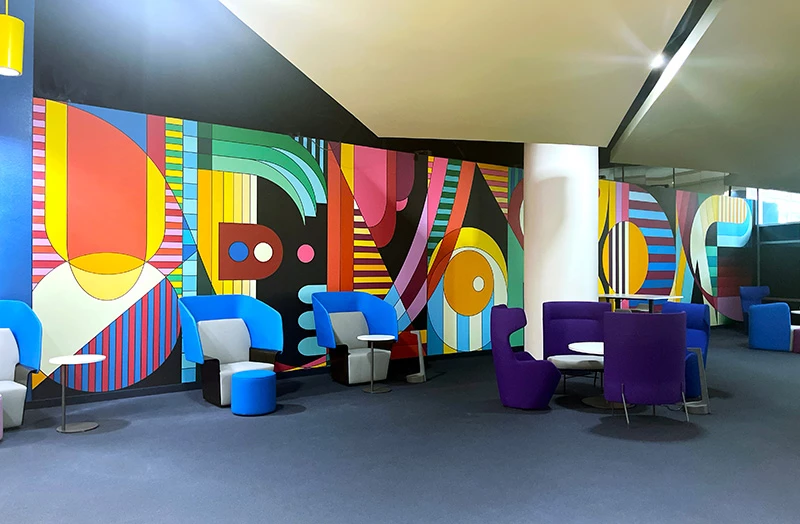
Smart Placement Shapes Everyday Attention
Wall position strongly affects whether painted artwork becomes a familiar visual marker.Viewing distance plus surrounding structures should guide every major placement decision.
- Corner surfaces increase visibility because artwork appears from several directions.
- Tall walls support vertical compositions that remain noticeable from greater distances.
- Wide facades suit horizontal scenes containing clearly separated visual sections.
- Entrance walls create strong recognition before visitors enter commercial premises.
- Open side surfaces provide enough room for detailed visual storytelling.
Careful planning gives every painted feature a stronger relationship to its surroundings.Regular surface checks also help preserve clarity after weather exposure plus daily wear.
Common Questions About Commercial Wall Art
Business owners often need clear answers before approving large painted projects.Practical decisions should consider visibility, maintenance plus long-term visual relevance.
- What makes artwork memorable? Strong shapes create faster recognition from distance.
- Which walls work better? Broad visible surfaces provide stronger viewing opportunities.
- What improves message clarity? Limited visual elements keep commercial ideas understandable.
- How should colors be selected? Clear contrast supports stronger everyday visibility.
- What supports longer use? Proper preparation reduces early fading plus surface damage.
Large commercial artwork works best when every element supports one clear purpose.Regular review helps businesses identify fading before visual quality noticeably declines.
Painted Identity Builds Recognition
Strong wall artwork becomes memorable through careful planning plus clear visual purpose.Good proportions help commercial imagery stay noticeable without creating unnecessary visual clutter.Careful upkeep ensures advertising murals continue presenting clear business identity over time.Consistent design decisions produce stronger outcomes than constantly changing creative directions.Steady execution creates lasting recognition without demanding perfection from every detail.